
RESTORE. CONTOUR. BALANCE.
Natural-Looking Volume Restoration & Facial Balance
Dermal filler treatments can help restore soft-tissue support, refine facial contour, and bring balance back to areas where volume naturally changes over time. Treatment may focus on lips, cheeks, chin, jawline, smile lines, around-the-mouth support, or subtle profile balancing, depending on your anatomy and goals.
The goal is not to look “filled.” The goal is thoughtful restoration, better proportion, and natural-looking structure that still feels like you.
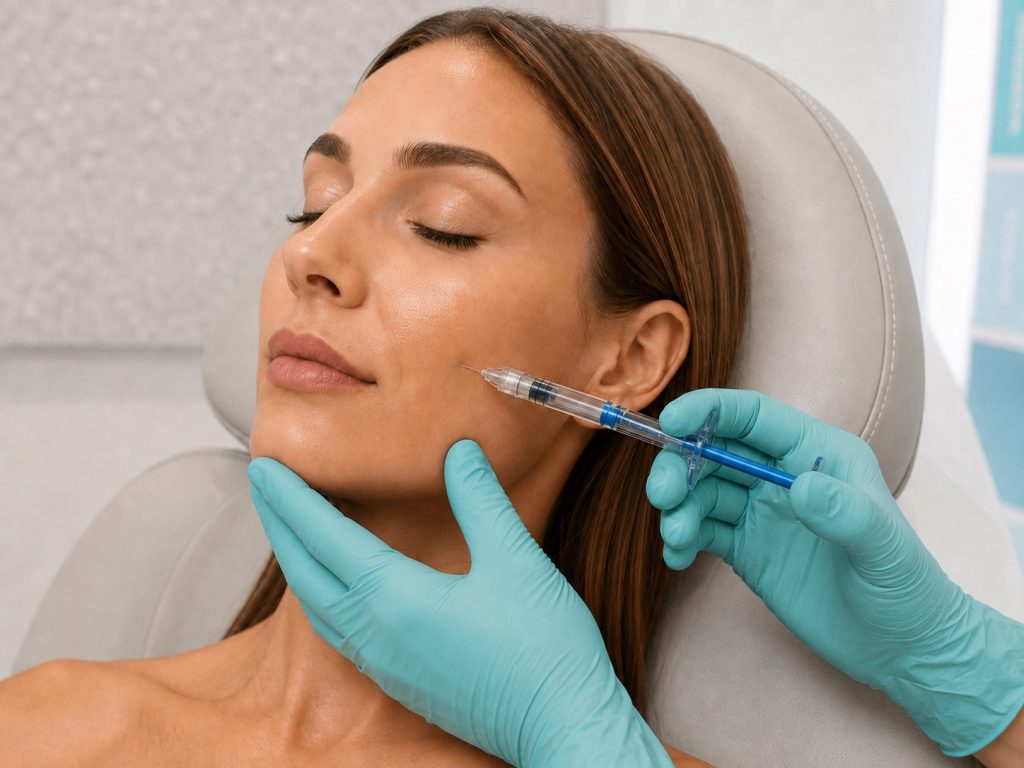
Popular Dermal Filler Treatment Areas
As the face naturally changes, soft-tissue volume and structural support can shift. Dermal filler may be used to restore areas of volume loss, support facial contour, soften hollowing, and refine proportions while keeping the overall result balanced and natural-looking.
Treatment planning starts with what you actually notice, not with a generic syringe count or a trendy template. The goal is to understand what changed, what bothers you, and what can be supported in a way that makes sense for your face.
01
Lip Volume & Shape
Lip filler can support soft volume, shape, hydration, and definition while still keeping the lips balanced with the rest of the face. The goal is a lip that fits you, not a copy-and-paste trend.
02
Lip Restoration
Over time, the lips can lose volume, structure, and border definition. Lip restoration focuses on bringing back support and softness rather than creating an obviously “filled” look.
03
Cheek Support & Contour
Cheek filler can help restore midface support, contour, and gentle lift when volume loss changes facial balance. This is often more about structure than simply adding fullness.
04
Lateral Cheek Lift
Strategic placement in the outer cheek can support facial contour and create a subtle lifted effect. The goal is natural structure, not overly rounded cheeks or a look that suddenly needs explaining.
05
Nasolabial Folds
Smile lines can become more noticeable when facial volume and support shift over time. Filler may help soften this area, often by supporting nearby structure rather than simply filling the fold directly.
06
Marionette Lines
Lines near the mouth corners can contribute to a heavier or more downturned lower-face look. Filler may be used to restore support and soften the transition around the mouth and chin.
07
Chin Refining
Chin filler can help refine profile balance and facial proportions, especially when the lower face needs more support. Small changes here can make the face look more balanced from the front and side.
08
Jawline Definition
Jawline filler can support a cleaner, more structured lower-face contour when appropriate. Treatment planning depends heavily on anatomy, softness, chin position, and the overall facial frame.
09
Around-the-Mouth Lines
Fine lines around the lips can come from movement, volume changes, and skin quality over time. Filler may help support the area, soften etched lines, and bring smoother definition around the mouth.
10
Under-Eye Support
Under-eye hollowing can sometimes be related to volume loss, facial structure, or shadowing. Filler may be considered carefully in select patients, but this area requires conservative planning and the right anatomy.
11
Liquid Nose Refinement
A nonsurgical nose treatment may be used in select cases to refine small contour irregularities or support profile balance. This is highly anatomy-dependent and not a replacement for surgery.
12
Facial Asymmetry & Balance
Small differences between sides of the face are completely normal. Filler can sometimes help support better visual balance while still keeping your natural character intact.
How Dermal Filler Treatment Works
Dermal filler treatment is planned around facial structure, natural volume changes, and your overall proportions. The goal is not to simply add volume, it is to restore support, refine contour, and create balance in a way that still looks like you.
A good plan starts with the conversation. What do you notice? What feels different than it used to? What are you hoping looks a little more balanced, rested, or supported? From there, we talk through what filler can realistically do, what it cannot do, and whether it makes sense for the result you want.

Step 01
Assessment & Planning
We review your anatomy, facial balance, volume changes, treatment history, and goals before deciding what makes sense.
Step 02
Treatment Design
A customized plan is created around restoration, contour, lift, and proportion, not a one-size-fits-all syringe count.
Step 03
Precision Placement
Filler is placed strategically to support structure, soften hollowing, refine shape, or restore volume where appropriate.
Treatment Areas
Lips
Subtle volume and improved shape.
Cheeks
Restore contour and support.
Chin
Improve projection and balance.
Jawline
Enhance structure and definition.
Smile Lines
Soften deeper folds around the mouth.
Facial Balancing
Create harmony across multiple areas.
Experience Matters With Advanced Treatments
Thoughtful Treatment Philosophy
Focused on natural-looking, realistic outcomes without pressure or overdoing it.
Clear Guidance Before Treatment
Understand your options, expectations, pricing, and what makes sense before moving forward.
Personalized Treatment Planning
Treatment is tailored around your anatomy, goals, comfort level, and lifestyle.
Long-Term Support
Focused on helping you feel informed, comfortable, and confident beyond a single appointment.

What To Expect After Filler Treatment
Dermal filler results are visible right away, but they are not fully settled right away. Swelling, tenderness, firmness, and occasional bruising are normal early on, and the final look usually becomes more refined as the filler integrates and the tissue calms. This is especially true with lips. They can look fuller for the first few days, so it is best to give them time before judging the final result.
| Timeline | Results |
|---|---|
| Day 1–3 | Swelling, tenderness, firmness, or bruising may be present. Some areas, especially lips, can look fuller than expected at first. |
| Day 4–7 | Swelling usually begins to calm, and the treated area starts to look more balanced. |
| Week 2 | Results typically look more refined. This is usually when the treatment starts to feel more settled and natural. |
| Several Months+ | Longevity varies by treatment area, product used, metabolism, facial movement, and overall treatment plan. |
Downtime
Most patients return to normal daily activities after treatment, but visible swelling or bruising can happen. Lips and more delicate areas may have more noticeable swelling for the first few days. You’ll receive aftercare instructions before you leave so you know what to expect and what to avoid.
Ready To Plan Your Treatment?
Book an appointment and we’ll talk through your goals, options, pricing, and what makes sense for you.
Trusted By Our Patients, Known For Thoughtful Care
Real experiences from patients who value clear education, honest guidance, natural-looking results, and comfortable care in Edmonds, WA.
EXCELLENT Based on 152 reviews
 Posted on Google
 Lisa SI’m extremely happy with my results. Stephan really listened to what I wanted and took a very thoughtful, conservative approach. He used surprisingly little product, but knew exactly where to place it for the biggest impact. The results look very natural — just refreshed and younger, not “done.” Several friends have commented that i look younger and assumed it was just my new haircut, which is exactly the subtle-but-dramatic result I was hoping for. On top of being extremely skilled, he’s also just a genuinely kind, personable guy who makes you feel comfortable and cared for throughout the whole experience. Highly recommend.Posted on Google
 Monique LI really enjoyed my first botox experience! Everything was clearly explained regarding the process and what I should expect from the results. The injections went so smooth and easy. I look forward to more services here in the future!Posted on Google
 Flor VExtremely happy with the service! Torres was amazing—he took the time to explain the process and procedure step by step, which I truly appreciated. The outcome of my Botox is fabulous! I’ve been receiving so many compliments. Thank you, Stephen Torres, for the excellent service.Extremely happy with the service and Torres was amazing. He was taking his time to explained it to me the process and procedure step by step.Posted on Google
 Brittany NVery friendly, knowledgeable and reasonable pricing!Posted on Google
 VA WGreat experience. Always happy with the results!Posted on Google
 Lesa LAbsolutely the best and would highly recommend!Posted on Google
 Tanya SAfter researching many places for lip and cheek filler I chose Stefan Torres Aesthetics! So thankful I did! Stefan took his time. I never felt rushed or pressured and ended up with the most beautiful lips and cheeks I could’ve ever imagined!!! They’re absolutely perfect! I’m going back soon to get Botox for my crows feet and know it’ll turn out beautifully as well! Thank you so much Stefan😊Posted on Google
 Gregory KGame Changer! Stefan really took the time to understand my needs and fitness goals. Set up an easy routine, diet and accountability. He was patient, comforting, yet detail oriented. His accufit systems and process works! Excited to continue my fitness journey with Stefan for many years to come!!
Your Questions, Answered
Everything you need to know before your visit.
We’re here to help you feel informed, comfortable, and confident in your treatment decisions.
Will I still look natural?
Yes, that is the goal. Dermal filler should be planned around your natural anatomy, not used to make you look like someone else. The focus is soft restoration, better support, and balanced contour so the result still feels like you.
How long do fillers last?
It depends on the area treated, the product used, your metabolism, facial movement, and how much support is needed. Some filler areas may last several months, while others can last a year or longer. During your appointment, we’ll talk through what is realistic for the area you are treating.
Do fillers hurt?
Most filler treatments are very manageable, but different areas feel different. Some injections are barely felt, while others, like lips, can be a little spicier because the area is more sensitive. Numbing, careful technique, pacing, and comfort measures are used to make the experience as tolerable as possible.
Is there downtime?
There is usually no major downtime, but swelling, tenderness, firmness, and occasional bruising are normal after filler. Lips and delicate areas can look fuller or more swollen for the first few days before settling. It is smart to avoid booking filler right before an important event.
How much filler will I need?
That depends on your anatomy, goals, and the area being treated. Some patients need a small amount for subtle refinement, while others need more support because volume loss happens naturally over time. The goal is not to use the most filler, it is to use the right amount in the right places.
What areas can be treated?
Common filler areas include lips, cheeks, chin, jawline, smile lines, marionette lines, around-the-mouth lines, and select profile-balancing areas. Treatment planning is based on facial structure, volume loss, proportion, and what will actually look natural on your face.
Can filler be combined with other treatments?
Yes. Filler is often combined with cosmetic neurotoxin, IPL, Morpheus8, or skin treatments depending on the goal. Filler supports volume, structure, and contour, while other treatments may address movement, skin tone, texture, laxity, or discoloration.
What areas can be treated?
Filler and botox-style treatments do different jobs. Dermal filler helps restore volume, support structure, and refine contour. Cosmetic neurotoxin relaxes targeted muscles to soften movement-related lines. Many natural-looking plans use one or both depending on what is actually causing the concern.